

How to choose a leadership coach
Part 1 of a series on coaching, this guide explores the distinctions between coaches, mentors, and consultants; the value of fresh perspective; how to know if you’re ready for coaching; and what truly matters when selecting the right leadership coach for your growth.
See Part 2: Your best people are ready. Coaching makes them unstoppable - your playbook for developing exceptional leaders at every level.
Do you know distinctions between them? Here is when each type of support is most valuable.
A corporate client recently contacted us seeking a coach for a high-performing employee being considered for promotion. The candidate excelled technically but struggled with communication and collaboration skills essential for senior roles. After we identified a coach, the client added an unexpected requirement: They wanted someone with the same professional background as the employee—someone who had "walked in the client's shoes."
This request prompted several discussions. Was the client seeking a coach or a mentor? Was the client clear on what a coach does? Did they raise a valid point? And why might industry expertise matter to some organizations and clients?
As we explored these questions, we delved into the distinctions between coaches, mentors, and consultants—and when each type of support is most valuable.
Christine Guthrie, PCC, Executive Leadership Coach, Founder of Authentic Ascent and Faculty at Georgetown Leadership Coaching Program, clarified, “There are moments when a leader needs specific skill-based support. That's the work of a consultant, trainer or facilitator. Coaching is different - a more spacious, reflective partnership - and honoring that difference allows transformation to unfold."
Understanding the roles: Coach vs. mentor vs. consultant
Choosing the right type of guidance starts with clarity about your goals and desired outcomes.
Coaches focus on developing your capacity as a leader. Coaches don’t focus on the technical aspects of a job—our realm is communication styles, decision-making patterns, emotional intelligence, systems thinking, and the dynamics shaping human interaction. Coaching relationships address leadership challenges that transcend specific roles, which is why effective coaches work across industries.
Mentors share wisdom from their own career journeys. They offer advice on navigating a role, advancing in a company, or handling organizational politics. If you're seeking guidance from someone who has traveled a similar path and can illuminate the road ahead, you want a mentor.
Consultants provide expert solutions to specific business challenges. Need a go-to-market strategy? Technical expertise for a project? Strategy on industry-specific issues? A consultant brings specialized knowledge to solve defined problems.
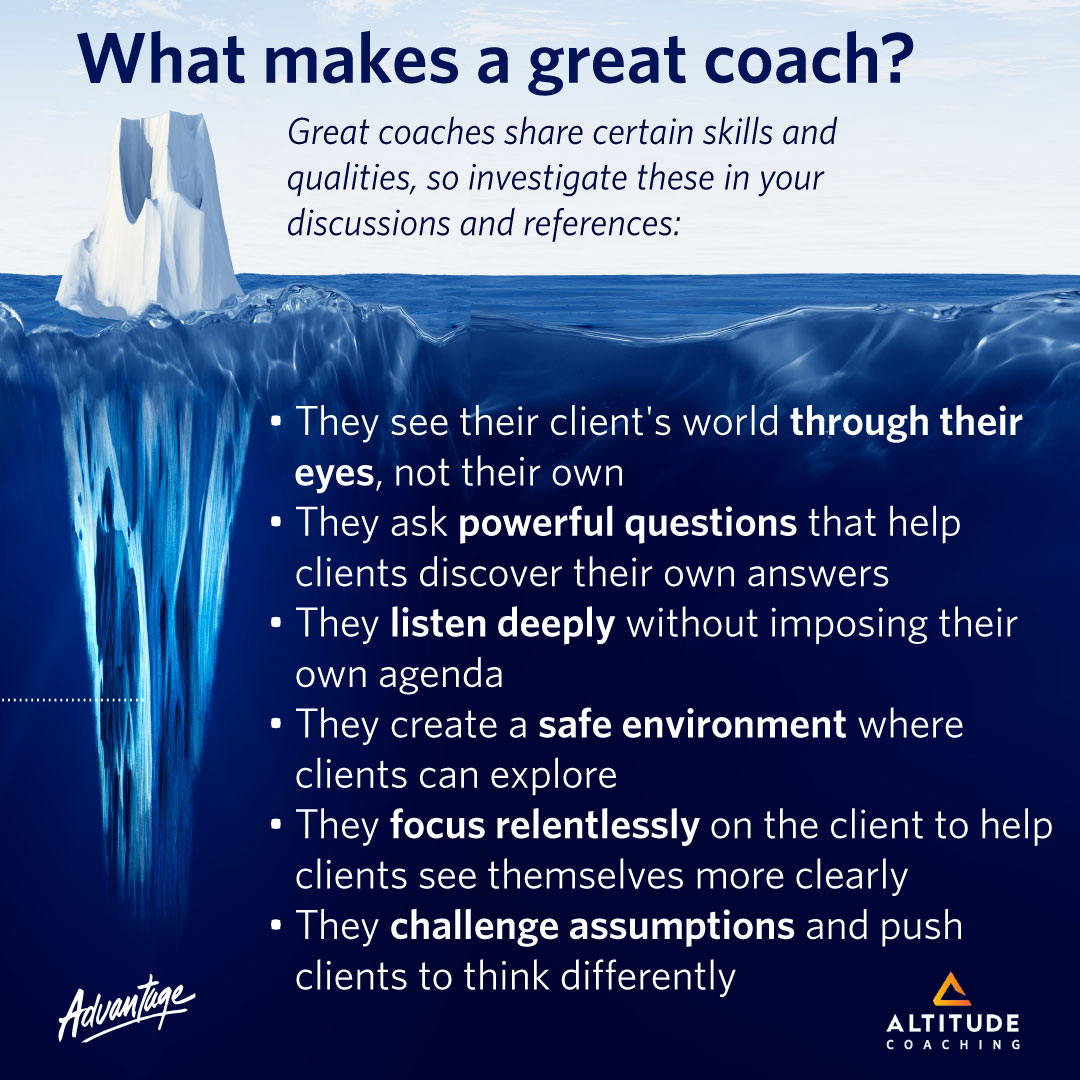
This guide also appears as a 4-part series on LinkedIn. Join the conversation there!
Download this as a print-friendly PDF.
Related: Join the coaching revolution | One great thing
Did you know?
Advantage can connect your leaders with top-tier certified executive coaches and coaching at scale? Contact us or talk to your Advantage partner!

- Your best people are ready. Coaching makes them unstoppable. - May 12, 2026
- How to choose a leadership coach - January 13, 2026