

Michigan did it before the NCAA championship. Are you doing it for your leaders?
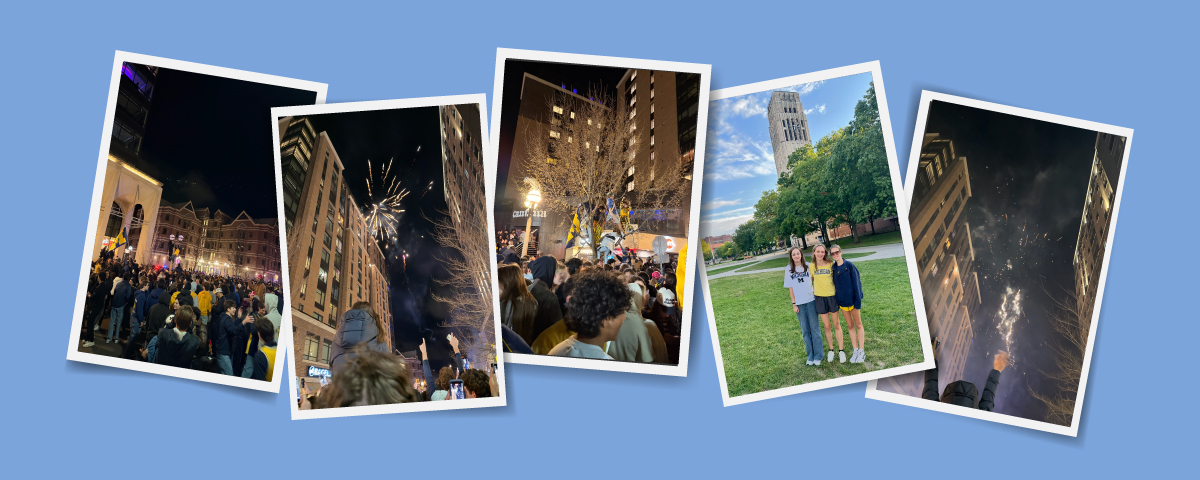
EDITOR'S NOTE: Advantage Partner Kristina DiStasio brings a personal lens to this story. Her oldest daughter is finishing her freshman year at the University of Michigan’s Ross School of Business, and Kristina recently visited campus with her family during the NCAA tournament. The energy and camaraderie across the university were hard to miss—from the basketball team’s championship run to the hockey team competing in the Frozen Four, and even the debate team winning a national title. That environment sparked her thinking about performance, preparation, and what gives teams an edge. (Photos include Kristina's three daughters in Michigan gear, and the post-game celebration on campus.)
This post also appears on LinkedIn. Join the conversation there!
Most organizations wait to see how leaders perform. Very few help them rehearse those moments in advance.
The NCAA National Championship game wasn't being played in a typical basketball arena. It was being played inside a football stadium, a cavernous space where a regulation court looks like a postage stamp on the floor. The sight lines are different. The depth perception is off. Everything feels bigger, farther, and unfamiliar.
Six days before the National Championship game, Michigan's head basketball coach Dusty May did something different.
He created a simulation.
His staff set up a makeshift practice lab inside their football stadium so players could get used to the depth perception they would experience at Lucas Oil Stadium.
It sounds small, but there's science behind it.
When we create an environment or even a mental image of ourselves performing, like shooting a three-pointer in a similar setup, it activates many of the same neural pathways we use in the real moment.
The motor cortex. The frontal lobe. This is called functional equivalence.
It's why visualization works. It builds confidence. It reduces anxiety. It prepares the brain before the stakes are real.
Players said it gave them an edge.
Not the only reason they won. But not insignificant either.
And it raises a bigger question: Why don't we do this with leaders in organizations?
We expect leaders to step into high-stakes moments. Difficult conversations, enterprise decisions, real pressure. Without ever simulating them first.
Most organizations wait to see how leaders perform. Very few help them rehearse those moments in advance.
Simulation gives leaders a way to experience the moment before it happens. To test decisions. To feel pressure. To see what they actually do.
And now AI is making this scalable in a way it never was before.
Michigan simulated the moment before it mattered. What are you doing to prepare your leaders for theirs?
At Advantage Performance Group, we build custom simulations that help leaders practice the moments that matter most before they happen for real. If you're curious about what that looks like for your organization, we'd love to talk.

- Michigan did it before the NCAA championship. Are you doing it for your leaders? - April 9, 2026
- Five core beliefs about leadership development in organizations - January 23, 2025